A Complete Komodo Island Cruise Route Guide from Bali
- Voyages cover approximately 250 nautical miles aboard traditional Indonesian Phinisi schooners.
- Itineraries feature key stops like Moyo Island, Satonda, and Gili Lawa for diving and trekking.
- The primary objective is encountering the Komodo dragon in its native, arid habitat.
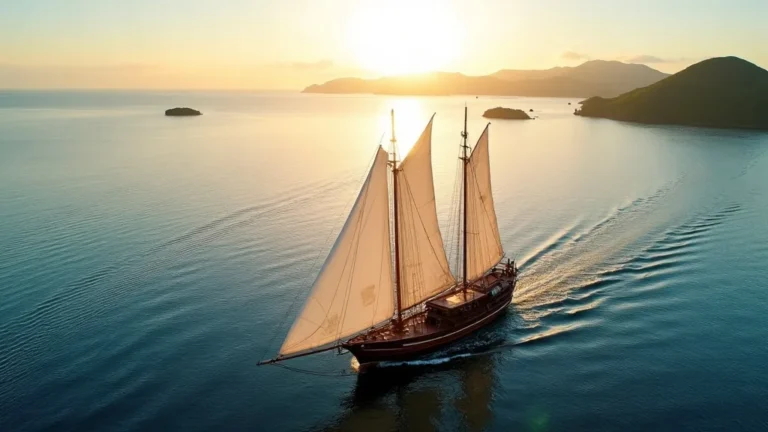
The air shifts the moment you leave Serangan Harbour. It sheds the sweet frangipani of Bali and takes on the clean, sharp scent of the open sea. On the deck of the Amandira, a 52-meter Phinisi, the only sounds are the snap of the seven sails in the wind and the gentle groan of the ironwood hull slicing through the Lombok Strait. Ahead, the volcanic peak of Lombok rises like a sentinel. This is not merely a transfer from one island to another; it is the beginning of a deliberate, unhurried passage back in time, a classic maritime expedition on the trail of ancient dragons. The journey east is the destination itself.
Charting the Course: Understanding the Bali to Komodo Passage
Embarking on a komodo liveaboard from bali is to undertake one of the great sea voyages of Southeast Asia. This is not a simple point-to-point trip but an island-hopping odyssey that crosses one of the world’s most significant biogeographical boundaries. The route from Bali to Labuan Bajo, Flores—the gateway port for Komodo National Park—spans roughly 250 nautical miles, a distance best covered over a minimum of seven days to truly appreciate the shifting landscapes and cultures. The vessel of choice for this passage is the Phinisi, a two-masted Indonesian schooner whose design has been perfected over centuries by the Bugis seafarers of Sulawesi. Today’s luxury Phinisis, crafted from local teak and ironwood, are floating boutique hotels, complete with air-conditioned suites, gourmet chefs, and PADI-certified dive masters. Our captain, a Flores native with 20 years of experience navigating these waters, explains that the primary challenge is the Lombok Strait, a deep channel where currents can surge at over 6 knots. This strait also marks the famed Wallace Line, the invisible divider between Asian and Australian fauna. East of this line, the world changes, and that transformation is the narrative of your journey.
Days 1-2: Crossing the Wallace Line and Discovering North Lombok
The first 24 hours are about acclimating to the rhythm of the sea. After departing from Bali’s Benoa or Serangan harbor, the first major navigational task is crossing the deep Lombok Strait. This passage is best done overnight, and waking up to the silhouette of Mount Rinjani dominating the horizon is a powerful experience. The destination is the chain of small islands off the northwest coast of Lombok. While many itineraries rush past, the insider’s move is to anchor at Gili Sulat, a protected marine area far from the tourist crowds of the more famous Gilis. The water here is placid and exceptionally clear, offering a gentle introduction to the region’s snorkeling. We spent the afternoon exploring a vibrant coral garden just 50 meters from a deserted white-sand beach. By evening, the crew had prepared a seafood barbecue on the sand. As our cruise director, Anton, pointed out, this initial stop serves a purpose: it’s a tranquil counterpoint to the powerful currents of the strait and a chance to check all dive and snorkel gear before heading into more remote waters. The first two days set the tone for the expedition—a blend of serious sailing and serene, exclusive moments.
Days 3-4: The Volcanic Wonders of Sumbawa
Leaving Lombok behind, the cruise enters the waters of West Nusa Tenggara, with the large, rugged island of Sumbawa to starboard. The landscape becomes noticeably drier, the greens more muted. The first key stop is Moyo Island, a nature reserve that gained fame in the 1990s when it was visited by Princess Diana. The main attraction is a multi-tiered cascade called Mata Jitu Waterfall, accessible via a short trek through the forest. The journey itself is part of the experience, with opportunities to spot macaques and wild boar. The pools at the base of the limestone-filtered falls are a brilliant turquoise. The following day brings an even more geologically dramatic stop: Satonda Island. This small, uninhabited island is essentially the caldera of a long-extinct volcano, with a deep saltwater lake at its center. The lake became saline after the cataclysmic 1815 eruption of nearby Mount Tambora—a VEI-7 event that was the largest in recorded history—triggered a tsunami that flooded the crater. The island has a mystical quality, particularly around the “wishing trees” (Kalibuda trees), where visitors and locals have tied stones to the branches for generations, each representing a hope or prayer. These two stops on the Komodo Island cruise route guide from Bali offer a profound lesson in the raw power of nature that has shaped this entire archipelago.
Days 5-6: Entering Komodo National Park’s Northern Frontier
The arrival into Komodo National Park is unmistakable. The islands become more numerous, their hillsides corrugated and savanna-like, scorched to a golden-brown by the dry season sun. This is the landscape as described by the UNESCO World Heritage Convention, which inscribed the park in 1991. Our first anchorage is typically in the northern reaches of the park, at Gili Lawa Laut or Gili Lawa Darat. These islands form a protective bay with some of the park’s most celebrated dive sites, including Crystal Rock and Castle Rock. These are not for the faint of heart; the currents that sweep through these channels can be formidable, but they bring with them an incredible density of marine life. On a single dive at Castle Rock, we encountered multiple whitetip reef sharks, giant trevally hunting in packs, and a school of thousands of fusiliers. For non-divers, the main event is the sunset trek to the summit of Gili Lawa Darat. The 45-minute climb is steep but rewards you with one of the most iconic panoramas in Indonesia—a sweeping view of the sun dipping behind the volcanic islands. Water temperatures in the park can vary significantly, from a warm 28°C in the north to a bracing 20°C in the south due to cold water upwellings from the Indian Ocean.
Days 7-8: The Heart of the Dragon’s Lair and Pink Beaches
This is the climax of the expedition. The focus shifts from the sea to the land, and to the park’s most famous resident: the Komodo dragon (Varanus komodoensis). Most 5-7 Day Phinisi Diving Cruises will offer a trek on one of two islands: Rinca or Komodo. While Komodo Island is larger and more famous, our guides often favor Rinca. It is smaller, less forested, and the dragon population of around 1,300 individuals is densely concentrated, making sightings more probable. Upon landing, you are immediately assigned a park ranger, identifiable by their uniform and the long, forked stick they carry—a simple but effective tool for fending off an inquisitive dragon. The trek takes you through a parched landscape, past dragon nests that look like large mounds of earth, and to a waterhole where the giant lizards often congregate. Seeing a 3-meter-long male saunter across the path is a genuinely primeval experience. After the exhilarating trek, the perfect antidote is an afternoon at Pantai Merah, or Pink Beach. The sand gets its distinct rosy hue from the crushed red organ pipe coral and microscopic organisms called Foraminifera, which mix with the white sand. The snorkeling just offshore is superb, with calm, clear water and healthy coral gardens teeming with fish.
Quick FAQ: Your Komodo Island Cruise Route Guide from Bali
What is the best time of year for a Komodo cruise from Bali? The prime season is during the dry months, from April to November. This period offers the calmest seas for the long passage and the best underwater visibility. The shoulder months of April, May, and June are particularly appealing, as the landscape is still relatively green after the rainy season and there are fewer boats. July and August are peak season, with prices increasing by up to 20%.
Do I need to be a certified diver to enjoy the trip? Absolutely not. While Komodo is a bucket-list destination for divers, our itineraries are designed for everyone. Snorkeling in the park is world-class, with vibrant reefs accessible right from the surface. All our trips include trekking, beach excursions, and kayaking. For those curious about diving, our PADI instructors can conduct a “Discover Scuba Diving” experience in a safe, shallow bay.
How physically demanding is this expedition? The journey is moderately active. Onshore treks, like the one on Gili Lawa, can be steep and last for about an hour on uneven terrain. A reasonable level of fitness is recommended to fully enjoy the activities. Boarding the tenders from the main vessel requires some agility, though the crew is always present to provide a steadying hand. The pace onboard is relaxed.
What is the final port of call? The classic one-way voyage from Bali concludes at the bustling harbor of Labuan Bajo on the western tip of Flores Island. This town is the central hub for all tourism in Komodo National Park. From its Komodo Airport (LBJ), there are multiple daily 60-minute flights back to Denpasar, Bali (DPS), making the logistics for your return journey straightforward. According to Indonesia’s official tourism site, Labuan Bajo has seen significant infrastructure development in recent years to support its role as a premier destination.
A sea journey from Bali to Komodo is more than a vacation; it is a genuine expedition that charts a course across volcanic archipelagos and through waters teeming with life. It is an immersion into one of the last truly wild places on Earth, all from the comfort of a vessel that honors the great seafaring traditions of Indonesia. The experience of watching the sun set behind the jagged peaks of Padar Island from the deck of your Phinisi is an enduring memory that no photograph can fully capture. To chart your own course through this prehistoric paradise, explore our fleet and itineraries for a komodo liveaboard from bali. Let our team of experts, with decades of combined experience in these waters, craft an unforgettable voyage for you.